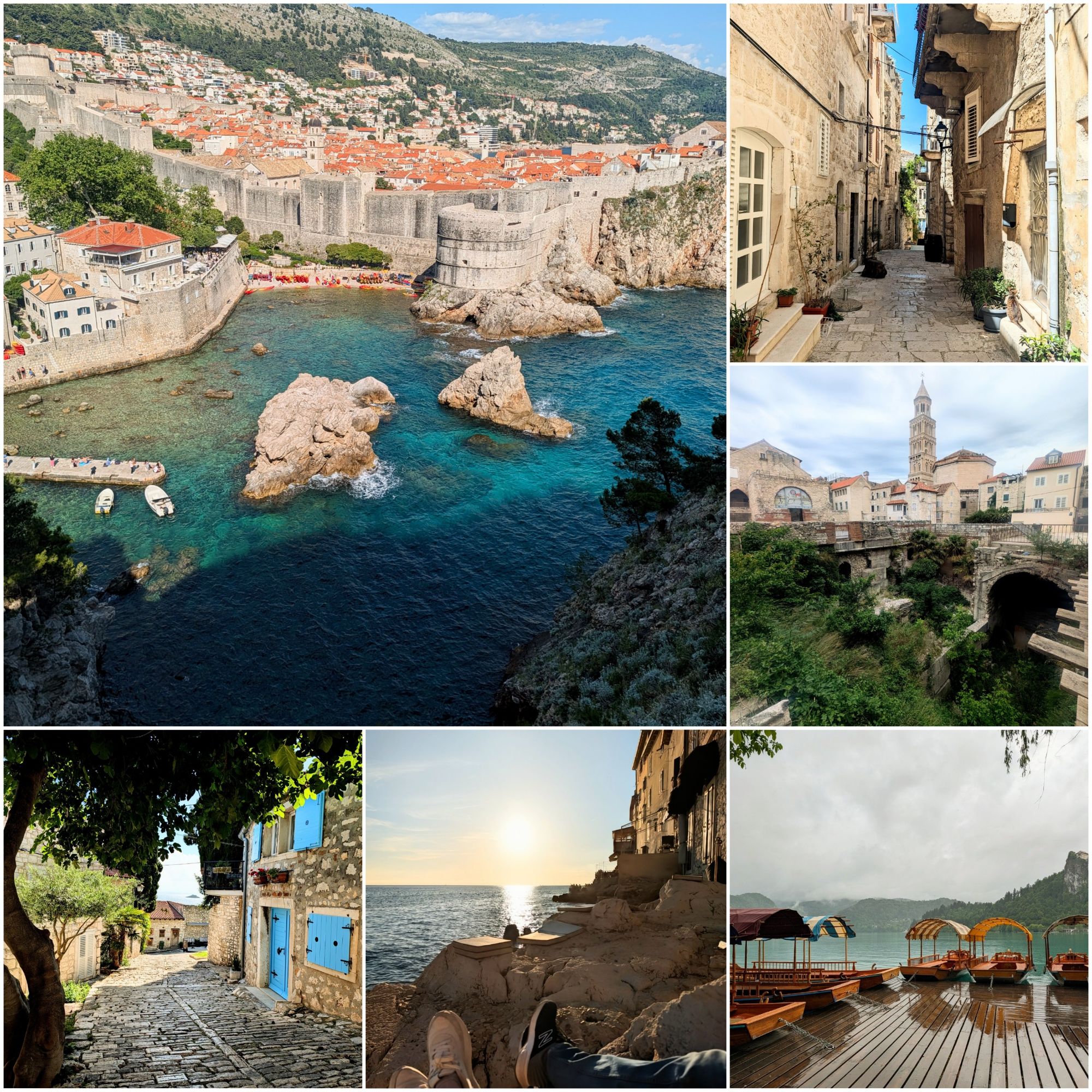
From the stunning coastline and shimmering blue waters of Croatia to the enchanting mountains and forests of Slovenia, this itinerary truly had it all! Whether your vibe is more sitting by the sea and drinking a glass of Croatian wine, soaking in the last rays of the sun as it sets over the water, hiking over waterfalls, exploring a bustling metropolis, or just counting how many cats you see (hint: it’ll be in the dozens), this trip has something for everyone to enjoy! We found this to be the perfect pace to enjoy both of these countrieswithin two weeks. And while there is so much more to see in the Balkans and we’ve already begun saving locations and activities for our next trip there, this covers the highlights and is a great introduction to the region!
So if you’re thinking of making a trip to either or both of these countries, read our Croatia & Slovenia itinerary below to we did it and what we’d do differently so you can learn from our mistakes! You can also find a day by day to see exactly how we structured our days here! And be sure to check back often as I go city by city. I’ll cover where we stayed, what we ate, what we did, and what I’d recommend!
If you’re ready to plan your trip and want an easy guide to the perfect itinerary based on what we learned from our trip, check out my perfect two(ish) weeks in Croatia and Slovenia with all the details of how to do it here!


At a Glance – High Level Itinerary
Dubrovnik, Croatia– 3 nights/2 days.
Korcula, Croatia – 1 night/1 day.
Split, Croatia – 2 nights/2 days.
Rovinj, Croatia – 1 nights/1 day.
Ljubljana, Slovenia – 3 nights/2 days.
Lake Bled, Slovenia – 2 nights/2 days.
Zagreb, Croatia – 3 nights/2 days.
Frankfurt, Germany – 1 night (we only stayed here because of flight options).
Total Time w/ Flights: 18 days
General Tips & What We’d Do Differently
Itinerary Suggestions
Honestly, I felt like we had almost the perfect amount of time in each city without feeling rushed or having long travel days. Sure, we didn’t get to do EVERY single thing in every city. But we also weren’t left just hanging around, twiddling our thumbs and killing time because we already did everything. We did find ourselves wanting just a little bit more time in Split, but part of that is because one whole day was taken up for a day trip to Krka National Park. So, if you have the time, adding one more night and day to Split to thoroughly explore it and surrounding areas would be ideal!
The biggest thing I’d change was our travel between Split and Rovinj, as this was our longest travel day. There was no efficient public transportation available, so we had to rent a cal. And while the drive was easy, it was also 5+ hours long. It also took us right by Plitvice National Park, which we ended up doing as a day trip from Zagreb.
So if I were to recreate this trip, I’d recommend keeping two nights (or adding an extra if you have time) in Split. Then drive to Plitvice National Park, visit the park that day, and stay somewhere near the park that evening. Continue to Rovinj the next morning and spend the whole day and night there. Then, to keep the trip the same length, remove a night from Zagreb since you wouldn’t need it for the day trip to Plitvice.
Language Barriers
I don’t know what I was expecting, but I certainly wasn’t anticipating how easy it would be to get around using English in Croatia and Slovenia. Not only did almost everyone speak enough English to get by, they spoke it with complete fluency. In the entire time we were there, we only met two people who did not speak enough English fluently. But even they still spoke enough to get by. Honestly, it was a little bit of a culture shock when we went to Germany on the way back home and struggled communicating more there.
TLDR: English won’t be an issue anywhere. You’ll be just fine!
Walking and Accessibility
One thing you’ll find as a theme with me on trips is we like to walk A LOT! This trip was no exception. And because many old towns, such as in Dubrovnik, Split, Korcula, Rovinj, and parts of Ljubljana are car free zones, you’ll end up wearing down the tread on your shoes as well. These old towns also predominantly are lined with cobblestone streets. So do your feet a favor and get some comfortable shoes!
In addition, these towns require going up and down stairs to get anywhere and don’t have ramps of any sort. If stairs are a limitation for you, please be aware that getting around may be tricky in some areas.


Best Time of Year to Travel
We traveled in early May in the hopes to avoid heavy tourist season. Because if you’ve read anything about Croatia (specifically Dubrovnik), you’ve read how busy it can get during peak season (June – August). While it was generally nice weather, it was cooler than expected. The temps averaged mid to high 60s during the day and low to mid 50s in the evening. And when that coastal wind whipped through those streets, it definitely got a little chilly!
The water was also too cold for swimming, at least if you’re a wimp like me. There were SOME people swimming in the sea and in some lakes, but most (sane) people stuck to just watching the water instead.
In terms of crowd levels, it was generally okay most of the time. A cruise ship did come in one day while we were in Dubrovnik and it was shoulder to shoulder on the main streets, which made walking anywhere a nightmare! I can’t imagine it in peak tourism season, so if crowds aren’t your thing, definitely don’t go during the summer!
From what I heard and experienced, I would say my ideal time to go would be September. The crowds are thinner than summer, it’s warm but not blistering, and the water is still warm enough to swim in!
Cell Phone Data
This obviously depends based on your cell phone plan. Check with your specific plan to see if you have international data worked in. If not, I HIGHLY recommend an eSIM. This is a way to get international data without having to get a physical SIM card when you get to the country, and they’re super easy and convenient to install. I use Saily, and paid $10.99 for 5 gigs of data. I did have to top off a couple of times as I ended up using more than expected, but it was still much cheaper than going through my cell phone provider!
Getting Around
Many people rent cars and travel from city to city. I think this is a great idea depending on where you stay. The only reason we didn’t do this is because in most places, cars weren’t allowed in city center. So we would have to park our car outside of town, away from where we were spending our days. We only rented a car for one day and opted for other means of transportation the rest of the time. These were a combination of buses and ferries. Although they took a little more time, they also alleviated the stress of driving AND allowed us time to catch up on some much needed rest!
Buses
We booked most of our bus transports via Flixbux. This is usually who we travel with when traveling via bus in Europe because 1) it’s easy to book from the US and 2) they have pretty decent routes in most countries.
Word to the wise though, get to the bus stop no later than 15 minutes early! We were sitting outside of our bus, trying to snarf down a sandwich before our 4 hour bus ride, when it started to leave 10 minutes before their scheduled departure! Thankfully we flagged them down and got on. But had we gotten there 5 minutes before our scheduled time, they would have been gone. So don’t leave it to chance and make sure you’re there and on the bus ahead of time!
Ferries
Croatia has tons of islands worth visiting, so for our travel to and from Korcula, we used TP Line. They go to multiple other islands throughout Croatia and are very easy to book! Just be sure to pay attention to what port they depart from, as there may be multiple ports even in small cities!
Other Buses
For our travel to/from Lake Bled, we had to travel via a different bus. For our arrival bus, we booked directly at the Ljubljana Bus Station. But on our way back, we booked online via Arriva. The site was a little clunky and it took multiple tries before it let me book the ticket, but I eventually was able to do it online, saving me a trip to the main station in Bled! It also shows the timetables for the buses. But just a heads up, both buses we took arrived at their destinations a little late. So if, like us, you are planning to transfer to another form of transportation, make sure you allow plenty of buffer for arrival times!
Ubers
We used Uber on this trip more than any other trip. From what I understand, they partner with local taxi companies and are essentially just a tool to call a local taxi, which is great. It was very convenient and affordable in both countries. In some places where public transport was lacking (or nonexistent), it was nice saving what could have been a 30 minute walk with our bags!
Credit Cards and Cash
Almost everywhere we went was incredibly credit card friendly, even for just a few bucks. There were a handful of bars that only accepted cash, and we had to use cash to pay for some park entrance fees. But in general, even the small hole in the wall restaurants and local coffee shops all took credit card. That being said, definitely make sure you still have cash on hand. You can always pull some out of an ATM (for a fee, of course) if needed!
Other Helpful Information
If you want to see further details on our trip, check my other blog posts about Croatia and Slovenia!


Something went wrong. Please refresh the page and/or try again.




Leave a Reply